Developments in Electromobility Discussed at Ev Charge Conference
Simultaneously with the EVCharge Show event held at Istanbul Expo Center on November 13-15, 2024, the EV Charge Conference was organized in cooperation with AVERE Türkiye Electro Mobility Association. Carefully selected session topics and valuable speakers who are experts in their fields shared information about the technologies offered in the e-mobility ecosystem, opportunities encountered in the transition to e-mobility, and developments in our country and in the world.
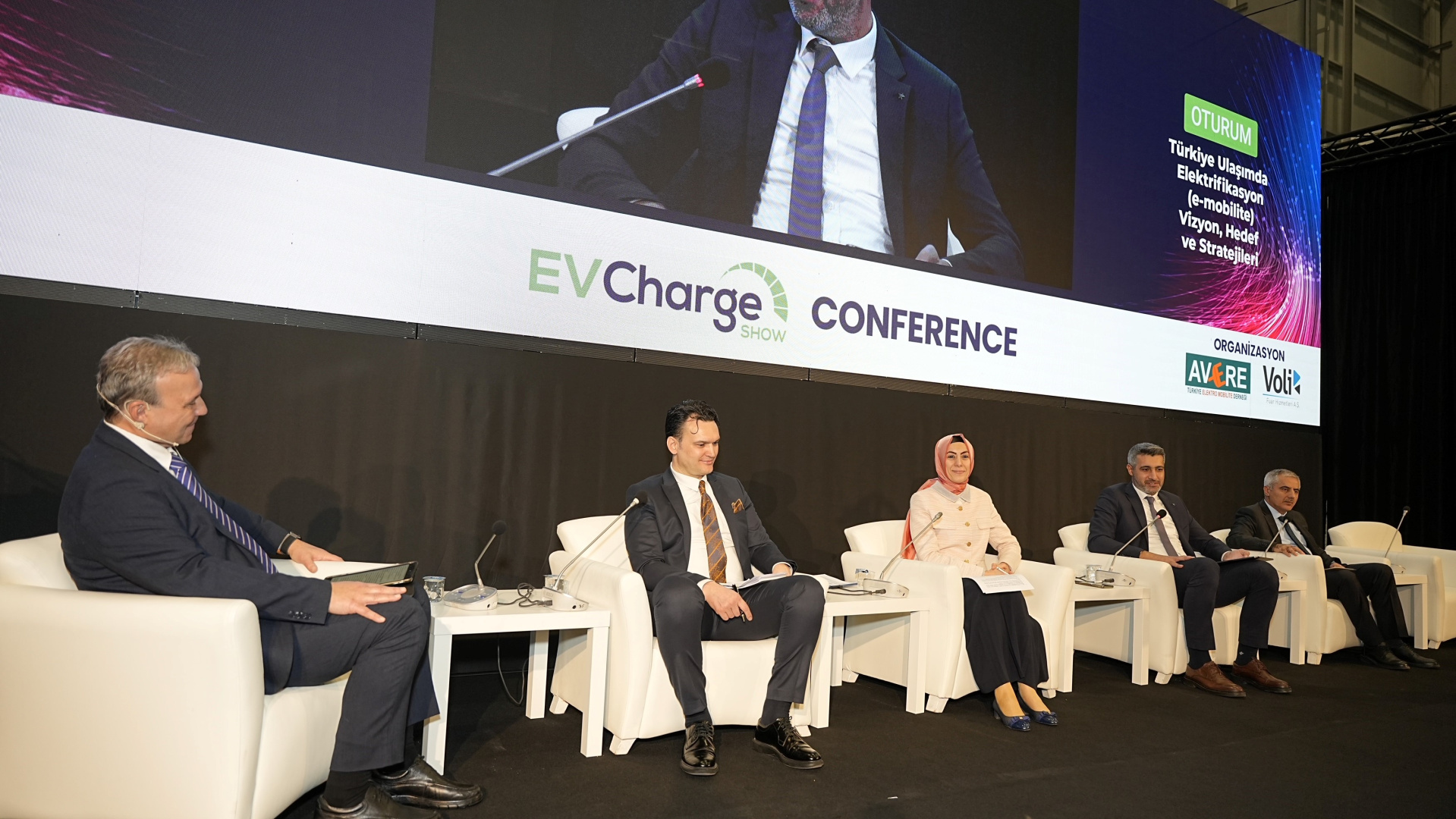
On the first day of the conference, a session on “Vision, Targets and Strategies for Electrification in Transportation (e-mobility) in Türkiye” was organized under the moderation of Haluk Sayar, President of AVERE Türkiye E-mobility Association and Board Member of AVERE European Electro Mobility Association. The session started with the opening speech of Prof. Dr. Cem Avcı, faculty member at Boğaziçi University and former President of AVERE Türkiye Electromobility Association. Prof. Dr. Avcı briefly touched upon the rapid progress of electromobility in our country and in the world, as well as AVERE Türkiye's pioneering and guiding activities in the sector.
Esma DİLEK, Deputy Director General of Communications and President of ITS Türkiye, Emre DABAK, Deputy Director General of National Technology at the Ministry of Industry and Technology, Atilla ERENLER, Deputy Director General of Vocational Services at the Ministry of Environment, Urbanization and Climate Change, and Şükrü Güray ÇELİK, Head of Transportation and Logistics Department at the Presidency Strategy and Budget Directorate, took part in the session as panelists.
The panelists shared information on Türkiye's electrification roadmap in transportation, studies shaping the electrification policy vision, the current situation in the infrastructure development processes for electric vehicles in our cities, incentive programs to support the electromobility transition process, Türkiye, studies for the domestic production and innovation of electric vehicles, steps taken for the electrification of heavy vehicles, the role of electrification in aviation and maritime transport, the share allocated from the central budget for electromobility studies, and information on the developments in our country and the world.
In his speech, DİLEK said, “In recent years, the increase in environmental sensitivities on a global scale has focused today's world on changes and trends called ‘energy transformation’ or ‘green transformation’. The multilateral conventions signed to combat climate change and contribute to environmental sustainability, such as the Paris Agreement, to which Türkiye is a party, the commitments made in the National Contribution Declaration submitted by Türkiye under the Paris Agreement, and Türkiye's 2053 net zero emission target play a role in shaping electrification policies in Türkiye.” She stated that Türkiye's electrification policies and strategies have been shaped by the strategy documents and action plans published by the Ministry of Transport and Infrastructure (MoTI), the Ministry of Energy and Natural Resources, the Ministry of Environment, Urbanization and Climate Change, the Ministry of Environment, Urbanization and Climate Change, the Ministry of Trade, the Ministry of Industry and Technology, our public institutions and local governments, the strategic plans published by our ministries and the 12th Development Plan, and that the issue of making electric vehicles widespread in our country has now become a state policy and that efforts are being made to advance the work on a legal basis. Within the legal framework, she stated that the Energy Market Regulatory Board continues its regulatory activities to create a free market with sufficient and sustainable electric vehicle charging infrastructure. DİLEK shared information on the regulations and studies carried out by public institutions and organizations for electromobility. She touched upon MoTI's work on electrification of railways, the role and impacts of the transition to electric vehicles in the aviation and maritime sector, and the steps taken in the European Union for the electrification of heavy vehicles. Within the scope of the studies carried out within the scope of the “Determination of the Location Selection of Electric Vehicle Charging Stations and Creation of Simulation Program” carried out by MoTI in order to advance the infrastructure development process for electric vehicles in our cities within a plan and to encourage the use of electric vehicles, she said that the need for charging stations needed for intercity journeys on the road network was determined for the years 2029, 2035 and 2053, the areas where charging stations should be established with priority were revealed with the model, and the outputs of the project were shared with the relevant sector representatives through meetings.Thus, she stated that Türkiye's current and future electric vehicle charging demand and supply for the current and future years are made by evaluating the spatial analysis of charging stations. She emphasized that in order to ensure electric mobility transformation, a future road map of electric vehicle charging stations was determined, taking into account different target years, including information such as the number, type, fee, location, etc. of future charging stations on the highway network of our country, especially highways, railway stations, ports, which are the service areas of the ministry.
The questions of the participants were answered by the panelists and a perspective on electromobility trends, challenges, opportunities and potentials in Türkiye and in the world was presented to the participants.